
When an Animal Aromatherapy Recipe Looks Fine at First Glance
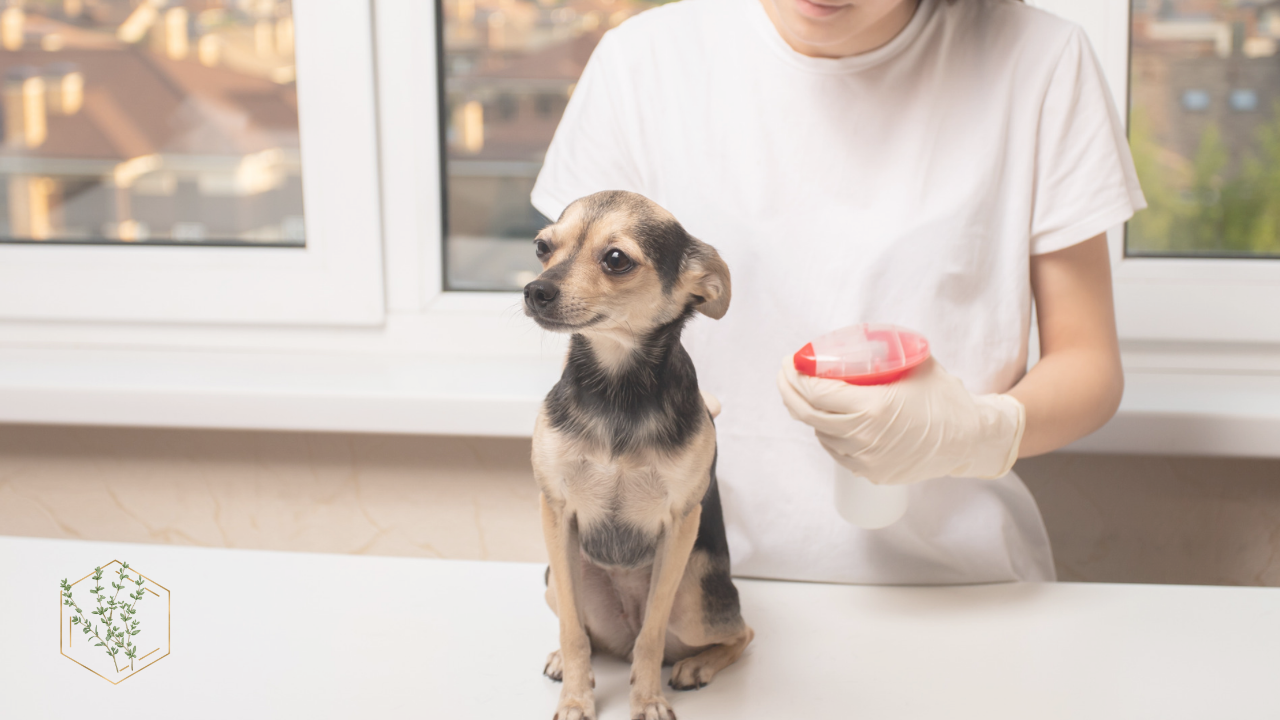
Essential oil recipes for animals are easy to find, and plenty of them look reasonable. The oils are familiar, the dilution seems low, and sometimes the recipe comes from someone who works in animal health. For a practitioner, a sensible-looking recipe is where the evaluation starts.
Amy Williams DeLong was recently sent a flea and mosquito spray for dogs. It combined water and alcohol with lemon, rosemary, tea tree, lavender, eucalyptus, pine, and peppermint essential oils. Most people would read that list without hesitating. Amy still had several questions before she could say anything useful about it.
The first was which plants were actually in the bottle. Rosemary comes in several chemotypes, each with a different constituent profile, and eucalyptus and pine each cover multiple species that differ meaningfully in chemistry and use. When a recipe names only the common plant, the practitioner is guessing at the chemistry before the evaluation has properly begun.
She also wanted to know why each oil had been chosen. Many essential oils have some reputation for repelling insects. Fleas, mosquitoes, and ticks don't necessarily call for the same formulation, though, and some oils have better support than others against a given pest. Where the spray will be used matters as well. A dog that spends its afternoons in long grass has different exposure than one that stays mostly indoors.
Then there was the formula itself. Essential oils don't disperse evenly in water, so a water-based spray needs an appropriate way to solubilize or disperse them. Without one, each spray may deliver a different amount of oil, and a formula that looks dilute on paper can behave less predictably in use. Also, with a water-based product, a preservative is recommended.
A list of oils considered safe for dogs would never have raised any of these questions.
Professional judgment often starts with noticing what's missing. "Is this oil safe for a dog?" is one question. A practitioner also wants to know which oil is actually in the bottle, how it has been formulated, why it was chosen, and how the method suits the animal and the situation.
That habit of asking is built through study and case work, and it's what lets a practitioner look at a recipe and see the gaps. You can see how Amy teaches this kind of reasoning in one module of her Animal Aromatherapy Certification, which we're offering free. Check it out today: https://www.essenceofthyme.com/animal-aromatherapy-free

